Fig App

Product Design

Product Design

Product Design

iOS

iOS

iOS

Fig helps people manage dietary restrictions by letting them avoid ingredients in groceries and when eating out through setting up dietary profiles (Figs)

Timeline

May 2025

Timeline

May 2025

Timeline

May 2025

Services

Product Design

Services

Product Design

Services

Product Design

Stack

Figma

Stack

Figma

Stack

Figma

Problem statement

When users first meet Fig, those early moments shape whether they stay, engage, and contribute. Across two high-impact projects, I redesigned Fig’s onboarding and restaurant flows to:

  • Reduce drop-off from confusing or empty search results.

  • Deliver value even in low-data regions.

  • Motivate users to contribute data that strengthens Fig’s network.

Projects covered:

  1. Onboarding Search Optimization – Helping users find what they’re looking for without sacrificing Fig’s template-first approach.

  2. Restaurant First Time User Redesign – Inspiring “Aha!” moments and encouraging reviews nationwide.


Why?

Initial Onboarding:

The first onboarding screen lists only templates and categories.

When users search for:

  1. Medical conditions — now fixed by adding a “Medical Conditions” section.

  2. Individual ingredients — still unaddressed, leading to confusion and drop-off.

We previously tested a search bar, but conversion dropped because queries like “lactic acid” returned no matches.

Restaurant Experience:

As Fig Restaurants expanded nationwide, we needed to ensure that new users experienced the “Aha!” moment — discovering restaurants that perfectly match their dietary needs — even in regions without many reviews or verified data. At the same time, we wanted to encourage users to leave reviews that improve the experience for everyone without making them feel like they’re doing work without reward.

Research

Theme

What I found

Impact

Early search behavior

Many users think in terms of specific ingredients or local restaurants they already know.

If these don’t show up, they assume Fig doesn’t work for them.

Data availability

Sparse data in certain regions or categories weakens perceived value.

Users are less likely to return if their first view feels empty.

Contribution motivation

Users want to help the community but need clear personal benefit.

Contributions improve Fig’s recommendations and match accuracy.

To understand the problem and potential solutions, we analyzed:

For Onboarding:

  1. Onboarding Analytics

  • High drop-off rates when first-screen searches returned no results.

  • Commonly searched terms were often individual ingredients or medical conditions, not templates.

  1. User Behavior

  • Many users think in terms of specific problem ingredients (e.g., carrageenan, butter) rather than broad dietary categories.

  • Users don’t inherently understand the difference between templates and ingredients.

  1. Internal Constraints

  • Templates power Fig’s backend algorithms and restaurant experience.

  • Individual ingredient selections lack the nuanced logic of templates (e.g., “Lactose Free” allows butter but excluding “milk” manually wouldn’t).

  • Prior testing of a search bar hurt conversion due to missing matches.

  1. Competitive Benchmarking

  • Other dietary apps surface both high-level categories and specific items in a single search, but use visual cues to prioritize category selection.

For Restaurants:

  1. Beta Learnings from Denver

  • In robust markets, users hit the “Aha!” moment quickly via high match-score restaurant pins.

  • Reviews and verified data built user trust and drove engagement.

  1. Nationwide Launch Constraints

  • Many regions initially lack reviews, resulting in “grey pins” with no match score.

  • Sparse data reduces perceived value, especially for new users.

  1. Current FTUE Shortcomings

  • Tutorial tooltips lacked emotional impact and didn’t clearly request reviews.

  • Users didn’t understand how match scores were personalized.

  • No compelling incentive loop between contributing reviews and improving personal recommendations.

  1. Comparable UX Patterns

  • Apps like Evernote use progress trackers to nudge early actions without hard-gating the experience.

Theme

What I found

Impact

Early search behavior

Many users think in terms of specific ingredients or local restaurants they already know.

If these don’t show up, they assume Fig doesn’t work for them.

Data availability

Sparse data in certain regions or categories weakens perceived value.

Users are less likely to return if their first view feels empty.

Contribution motivation

Users want to help the community but need clear personal benefit.

Contributions improve Fig’s recommendations and match accuracy.

To understand the problem and potential solutions, we analyzed:

For Onboarding:

  1. Onboarding Analytics

  • High drop-off rates when first-screen searches returned no results.

  • Commonly searched terms were often individual ingredients or medical conditions, not templates.

  1. User Behavior

  • Many users think in terms of specific problem ingredients (e.g., carrageenan, butter) rather than broad dietary categories.

  • Users don’t inherently understand the difference between templates and ingredients.

  1. Internal Constraints

  • Templates power Fig’s backend algorithms and restaurant experience.

  • Individual ingredient selections lack the nuanced logic of templates (e.g., “Lactose Free” allows butter but excluding “milk” manually wouldn’t).

  • Prior testing of a search bar hurt conversion due to missing matches.

  1. Competitive Benchmarking

  • Other dietary apps surface both high-level categories and specific items in a single search, but use visual cues to prioritize category selection.

For Restaurants:

  1. Beta Learnings from Denver

  • In robust markets, users hit the “Aha!” moment quickly via high match-score restaurant pins.

  • Reviews and verified data built user trust and drove engagement.

  1. Nationwide Launch Constraints

  • Many regions initially lack reviews, resulting in “grey pins” with no match score.

  • Sparse data reduces perceived value, especially for new users.

  1. Current FTUE Shortcomings

  • Tutorial tooltips lacked emotional impact and didn’t clearly request reviews.

  • Users didn’t understand how match scores were personalized.

  • No compelling incentive loop between contributing reviews and improving personal recommendations.

  1. Comparable UX Patterns

  • Apps like Evernote use progress trackers to nudge early actions without hard-gating the experience.

Theme

What I found

Impact

Early search behavior

Many users think in terms of specific ingredients or local restaurants they already know.

If these don’t show up, they assume Fig doesn’t work for them.

Data availability

Sparse data in certain regions or categories weakens perceived value.

Users are less likely to return if their first view feels empty.

Contribution motivation

Users want to help the community but need clear personal benefit.

Contributions improve Fig’s recommendations and match accuracy.

To understand the problem and potential solutions, we analyzed:

For Onboarding:

  1. Onboarding Analytics

  • High drop-off rates when first-screen searches returned no results.

  • Commonly searched terms were often individual ingredients or medical conditions, not templates.

  1. User Behavior

  • Many users think in terms of specific problem ingredients (e.g., carrageenan, butter) rather than broad dietary categories.

  • Users don’t inherently understand the difference between templates and ingredients.

  1. Internal Constraints

  • Templates power Fig’s backend algorithms and restaurant experience.

  • Individual ingredient selections lack the nuanced logic of templates (e.g., “Lactose Free” allows butter but excluding “milk” manually wouldn’t).

  • Prior testing of a search bar hurt conversion due to missing matches.

  1. Competitive Benchmarking

  • Other dietary apps surface both high-level categories and specific items in a single search, but use visual cues to prioritize category selection.

For Restaurants:

  1. Beta Learnings from Denver

  • In robust markets, users hit the “Aha!” moment quickly via high match-score restaurant pins.

  • Reviews and verified data built user trust and drove engagement.

  1. Nationwide Launch Constraints

  • Many regions initially lack reviews, resulting in “grey pins” with no match score.

  • Sparse data reduces perceived value, especially for new users.

  1. Current FTUE Shortcomings

  • Tutorial tooltips lacked emotional impact and didn’t clearly request reviews.

  • Users didn’t understand how match scores were personalized.

  • No compelling incentive loop between contributing reviews and improving personal recommendations.

  1. Comparable UX Patterns

  • Apps like Evernote use progress trackers to nudge early actions without hard-gating the experience.

Impact

By improving the onboarding experience:

  • Reduce onboarding drop-off from ingredient-only searches.

  • Maintain template-first logic for better backend performance.

  • Create more accurate user dietary profiles.

By reframing the FTUE:

  • Users in low-data regions will still experience the intended “Aha!” moment.

  • The review loop will strengthen data quality nationwide.

  • Users will understand the unique value of Fig’s personalized match scoring.
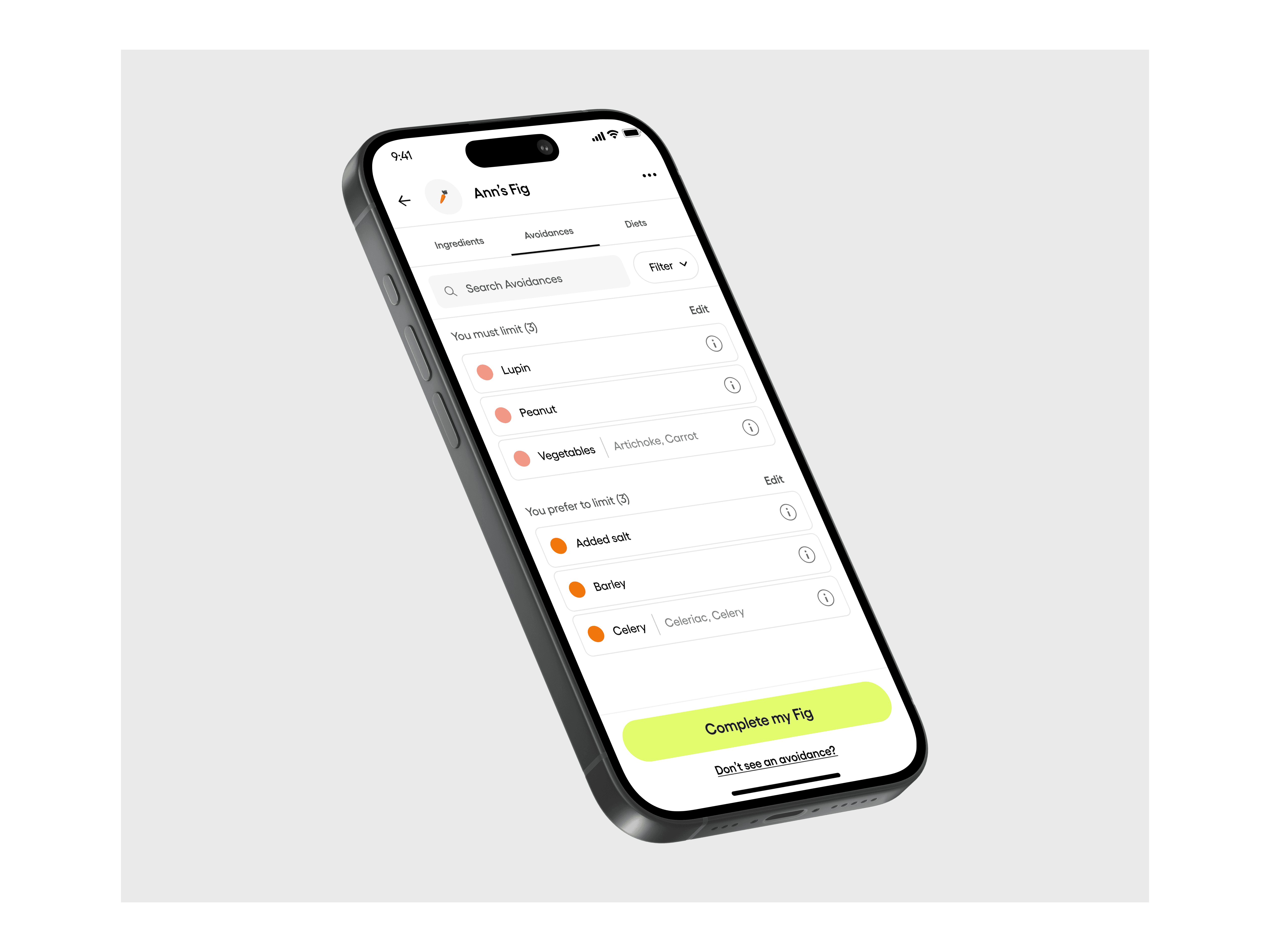

By improving the onboarding experience:

  • Reduce onboarding drop-off from ingredient-only searches.

  • Maintain template-first logic for better backend performance.

  • Create more accurate user dietary profiles.

By reframing the FTUE:

  • Users in low-data regions will still experience the intended “Aha!” moment.

  • The review loop will strengthen data quality nationwide.

  • Users will understand the unique value of Fig’s personalized match scoring.


By improving the onboarding experience:

  • Reduce onboarding drop-off from ingredient-only searches.

  • Maintain template-first logic for better backend performance.

  • Create more accurate user dietary profiles.

By reframing the FTUE:

  • Users in low-data regions will still experience the intended “Aha!” moment.

  • The review loop will strengthen data quality nationwide.

  • Users will understand the unique value of Fig’s personalized match scoring.


I'm available

Let's Connect

Feel free to drop me a message if you want to work together or just for a chat :)

I'm available

Let's Connect

Feel free to drop me a message if you want to work together or just for a chat :)

I'm available

Let's Connect

Feel free to drop me a message if you want to work together or just for a chat :)

Create a free website with Framer, the website builder loved by startups, designers and agencies.